
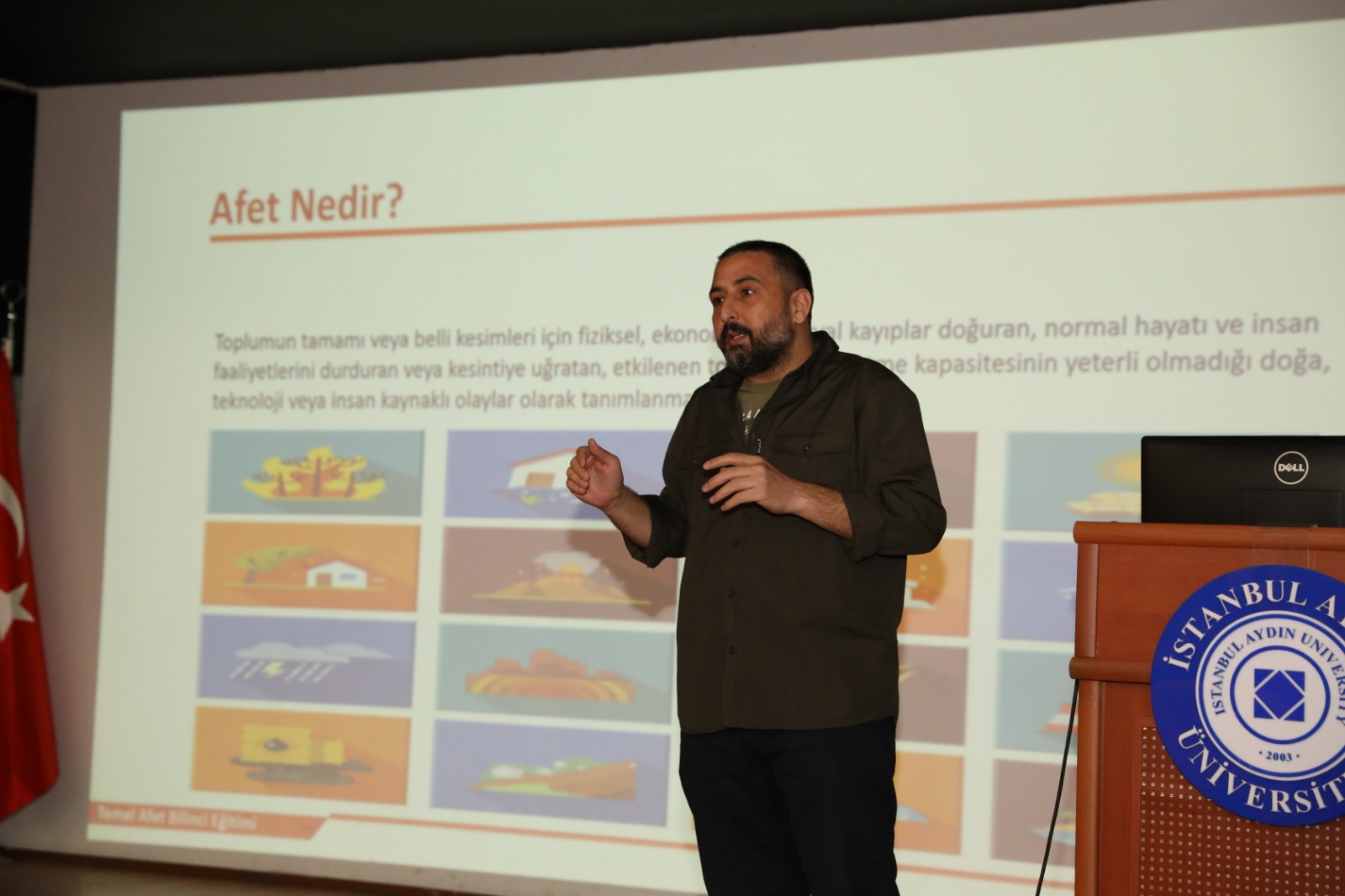

While the Kahramanmaraş-centered earthquake affected 11 surrounding provinces, efforts to raise awareness about earthquakes are being carried out across Türkiye. We asked Serhat Yılmaz, Coordinator of our University’s Disaster Education Application and Research Center, about what should be done before, during, and after a disaster.
Serhat Yılmaz, Coordinator of our University’s Disaster Education Application and Research Center (AFAM), stated that the greatest losses in disasters are caused by buildings and noted that the earthquake resistance of buildings can be determined through structural laboratories. Yılmaz also recommended strengthening or rebuilding unsafe buildings and listed the measures to be taken to protect against earthquakes as follows:
1-Non-slip pads for tables
Place non-slip pads under and inside objects on furniture such as cabinets, shelves, tables, and coffee tables inside the home.
2-Remove all loads from the tops of cabinets
Store all items placed on top of cabinets in safer areas, as they may fall during shaking and cause injury or obstruct your exit.
3-Secure tall furniture to the wall
Secure heavy and tall furniture to walls using appropriate methods and equipment.
4-Toxic and flammable materials in separate places
Store toxic and flammable materials separately in places where they will not fall, break, spill, or interact with each other.
5-Remove excess items
Move excess items out of the house or donate them to those in need.
6-Flexible connections for natural gas
Use flexible connections at points where gas or natural gas connects to appliances.
7-Secure items to the wall with fixtures
Secure electronic devices such as computers and televisions to the tables/stands they are on, and then secure those to the wall using appropriate methods and fixtures.
8-Decorative ornaments
Secure decorative items such as mirrors, picture frames, and lamps using hook screws at their connection points.
9-Cabinet doors
Lock all cabinet doors with strong latches or magnetic mechanisms.
10-Fire alarm systems
Install fire alarm systems in your home and participate in fire extinguishing training.
11-Flashlight
Place a flashlight and closed-toe, thick-soled slippers next to each bed.
12-Safe meeting points
Determine safe meeting points inside the home near exits, outside the building away from hazards, and outside the neighborhood.
13-Communication methods with family members
Develop alternative methods to communicate with family members after a disaster.
14-Information cards
Prepare information cards for all family members containing essential details needed in emergencies and carry them with you.
15-Emergency phone numbers
Teach every family member how and in which situations emergency phone numbers should be called.
16-At least 3 days of essential supplies
Prepare an emergency disaster kit by gathering at least 3 days’ worth of essential supplies, taking into account all family members’ needs to sustain life during disasters.
17-Insurance
Obtain insurance to protect against economic losses caused by disasters.
18-Drop, cover, and hold on or fetal position
Teach all family members where and how to perform protective actions such as drop, cover, and hold on or the fetal position—depending on the environment—to prevent panic and protect themselves from potentially harmful objects during a possible earthquake.
19-Prepare an evacuation plan
Prepare an evacuation plan that explains how to evacuate when you need to leave your residence.
20-Wear protective clothing and sturdy shoes
During evacuation, wear protective clothing and sturdy shoes, take your emergency kit with you, shut off utilities such as electricity, water, and natural gas, and lock your home when leaving.
21-Use evacuation routes designated by authorities
Act in line with warnings issued by authorities through various communication channels and use the evacuation routes designated by them.
22-Do not enter the building
Do not enter the building after an earthquake until authorized official units confirm that there is no structural damage.
23-Drills at least twice a year
Develop your disaster plan according to the needs all family members may have during a possible disaster and be sure to conduct drills at least twice a year.