Collaboration of Turkish Historians and Mongolian Archeologists to Solve the Mysteries of Central Asia

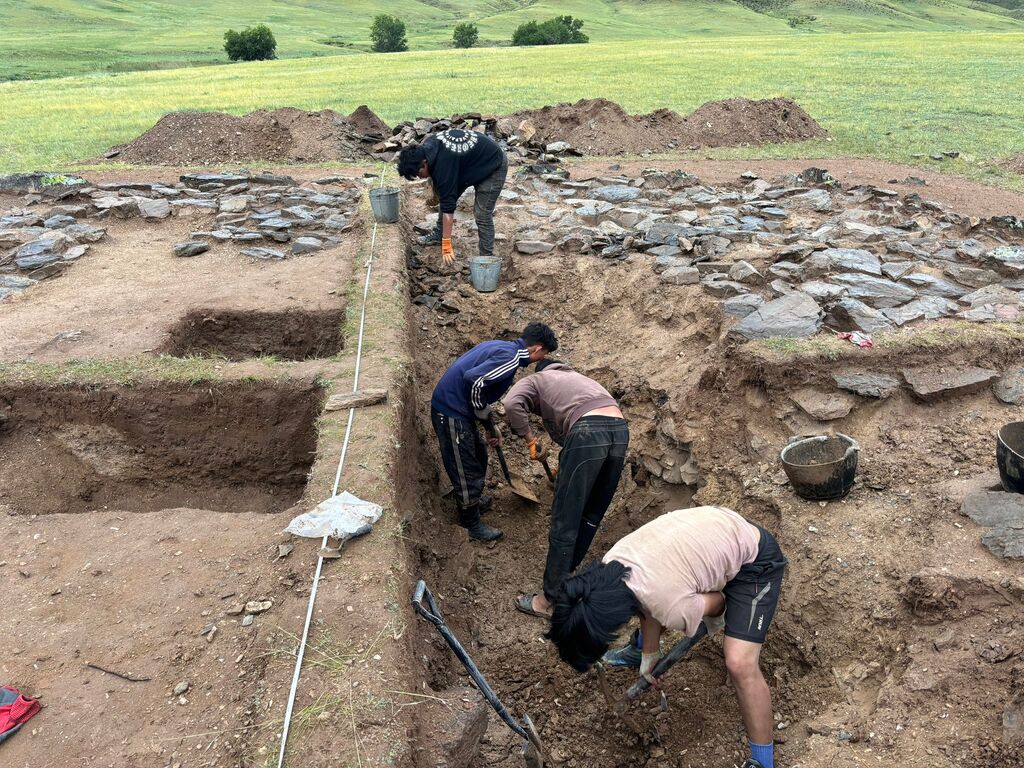
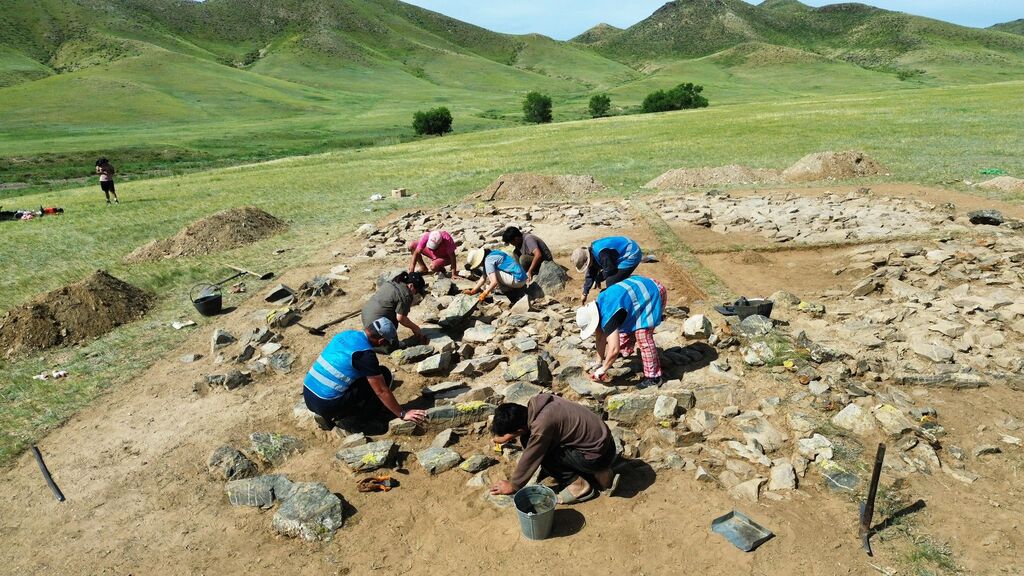
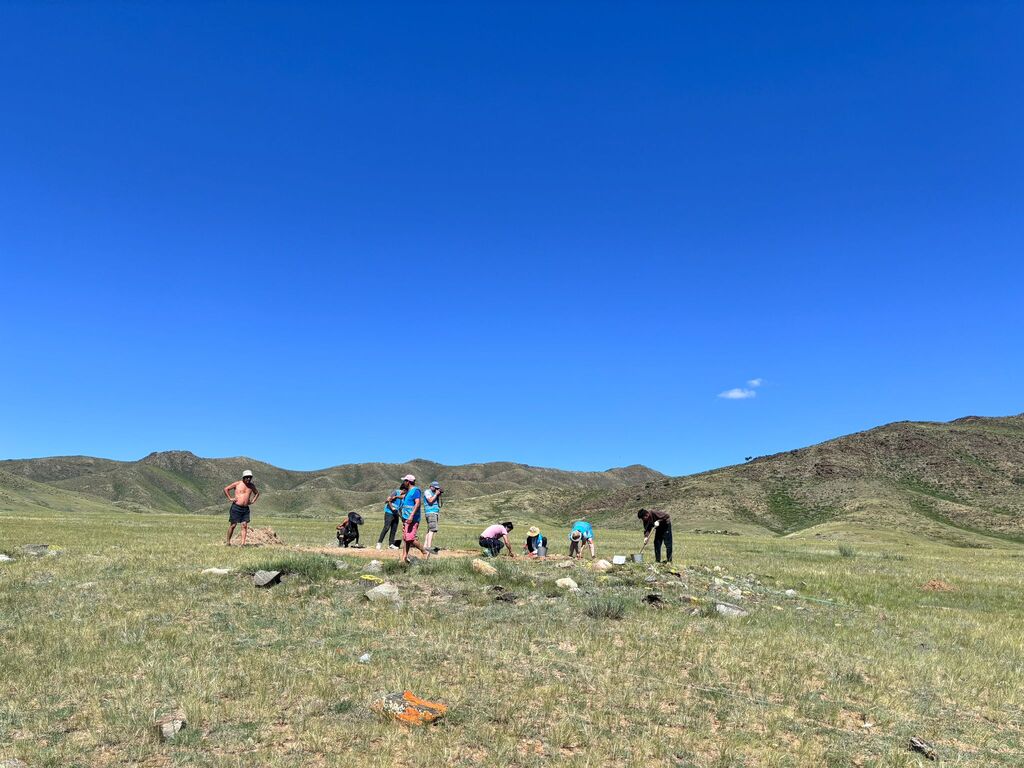
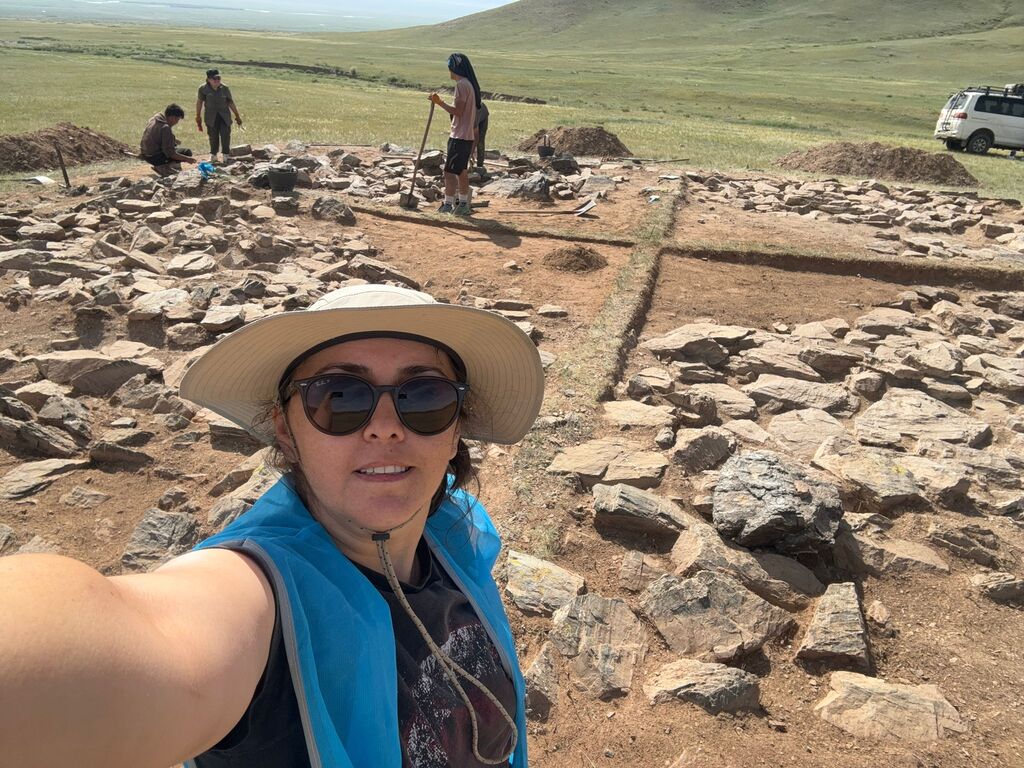
Mongolian archeologists and Turkish historians digging graveyards of Shohv Uul Mountain in Altanbulag district of Tov province in Mongolia. Lecterur Elvin Yıldırım takes part as Executor of co-op fieldwork of “Atlılar Kültürü 2024” based on the history, culture and art of Migrant Settlers.
Within the scope of the Atlılar Kültürü-2024 Project, archaeological excavations in Mongolia that will illuminate our historical and cultural roots are of great importance. Starting in 2019, the excavations were suspended due to kovidsalgı. The region has been home to nomads since the Bronze Age. However, this 10×10 Kurgan, which we are trying to unearth with the Atlılar Culture 2024 project, differs from Bronze Age examples in many aspects. According to the information we have obtained from Chinese sources, the Tula River is located within the historical Ötüken region. The sources place Ötüken exactly between the Orkhun and Tula rivers. In this respect, the kurgan may belong to the period of Juan Juans, Gokturks or possibly Uighurs.
In the works sponsored by the İlteriş Foundation, archaeological excavations are being carried out in the tombs and monuments of the Middle Age period nomads in the Shovh Uul Mountain and Tuul River basin in the Altanbulag district of Tuv province of Mongolia.
“Stating that they started the ‘Culture of Horsemen-2024’ project on the history of nomads, history, culture and art of Turks and Mongols, Head of the Department of History of our University Assoc. Prof. Dr. Elvin Yıldırım said: “We have planned 3 years and in our first year, we are carrying out joint field studies under the title of Culture of Horsemen and excavation in Turkish-Mongolian partnership under these field studies. At the end of the excavation, joint articles will be published by experts from both Turkey and Mongolia. The tomb we have identified and excavated in the Tuul River basin may belong to the Gokturks or possibly the Uighurs period. It is a 10-meter by 10-meter square planned tomb complex. There is a sacrificial area here according to the ancient Turkish tradition, and the square plan distinguishes this tomb from the others. The Turks of that period had the idea of dominating the four directions, that is the four corners of the world. We see that it is a tomb built within the framework of this view.”
Stating that such graves were found in Mongolia before, but their sizes were very small, Assoc. Prof. Dr. Yıldırım emphasized that the grave found in the recent excavations was much larger than the others and that it was seen as a monument area created alone, without any small kurgan or grave area around it.
The project coordinators from the Turkish side are Assoc. Prof. Dr. Elvin Yıldırım (Istanbul Aydın University), Prof. Dr. Kürşat Yıldırım (Istanbul University) and researcher Dr. Şeyma Sapma (Istanbul University). On the Mongolian side, Dr. Ölziibayar Sodnom (Mongolian University of Culture and Arts), Dr. B. Ochir (Mongolian Academy of Sciences), and Dr. Zauryesh Ryskhan (Istanbul University).