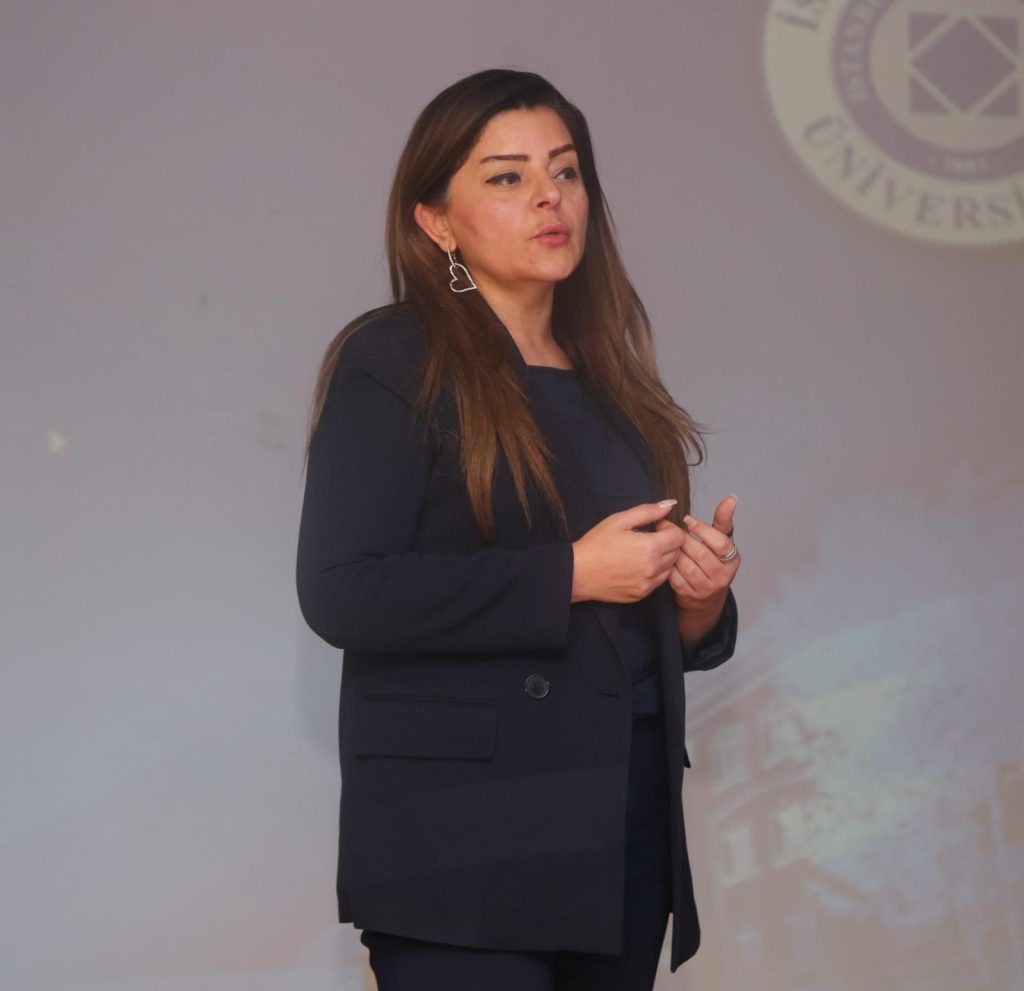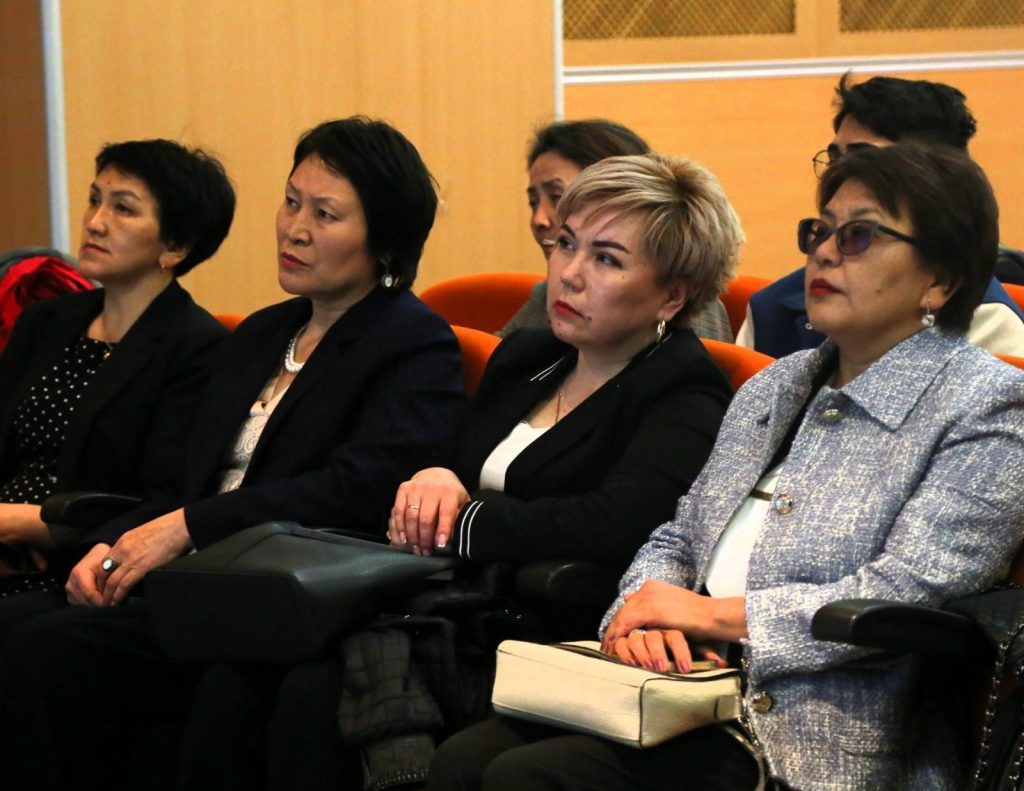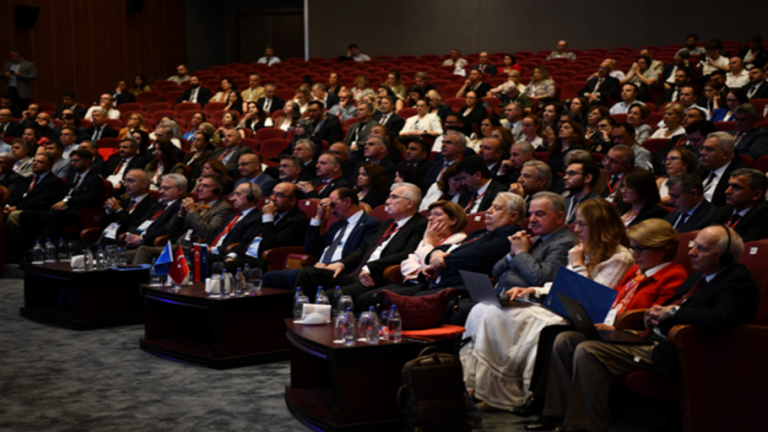
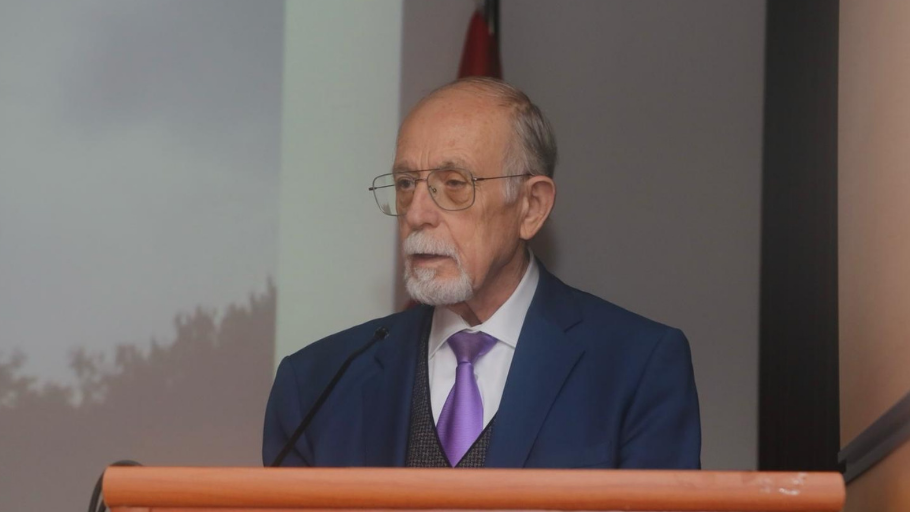

A conference titled “TRNC Gazi Magosa Çanakkale Martyrs’ Cemetery” was held at our university. The conference, hosted by Assoc. Prof. Dr. Elvin Yıldırım and moderated by Assoc. Prof. Dr. Gökçen Çatlı, featured Prof. Dr. Metin Akar, Faculty Member of the Department of Turkish Language and Literature, as a speaker.
Prof. Dr. Metin Akar provided detailed information about the history of Turks in Cyprus and the Magosa Çanakkale Martyrs’ Cemetery. Emphasizing that the Gazi Magosa Çanakkale Martyrs’ Cemetery is the burial place of Turkish soldiers held captive in Cyprus, Prof. Dr. Akar said, “Cyprus is an island in the Eastern Mediterranean. This island is a dominant point for the Middle East and Mediterranean countries. Cyprus is part of Anatolia. It is considered an extension of the Taurus Mountains.”
Professor Dr. Metin Akar stated that the island was surrendered to the British in 1878 and that the first groups of prisoners were brought to the port of Gazi Magosa in September 1916, ten days apart, on two separate ships accompanied by British warships. “According to Ahmed Sami, there were approximately two thousand prisoners. The people of Magosa established dialogue with the prisoners. Among the prisoners were a military doctor, Dr. Şevket, a Magosa soldier, and an imam. The soldiers consisted of privates, corporals, sergeants, and sergeant majors. The prisoners were used in road construction, transporting cargo from the port to ships for shipment off the island, and in the quarry. The deceased prisoners were buried in cemeteries near today’s Namık Kemal High School and in a special cemetery next to the camp.”
Prof. Dr. Akar stated that there are 217 martyrs at the Çanakkale Martyrs’ Cemetery, with thirty-three martyrs buried in separate graves and one hundred eighty-four martyrs buried in a mass grave in the middle of these thirty-three graves, and that a list of these martyrs exists. “Ahmed Sami from Cyprus obtained this information in 1914 from British documents and from the inscriptions on the gravestones of the martyred soldiers. The camp that was established had dormitories, workshops, and mosques for Turkish prisoners. The foundations of these structures still exist today. The people of Famagusta also participated in the funeral ceremonies. The date of death of the last martyr with an inscription is February 8, 1920.”
Providing detailed information on the subject, Prof. Dr. Metin Akar answered questions from students at the end of the conference.